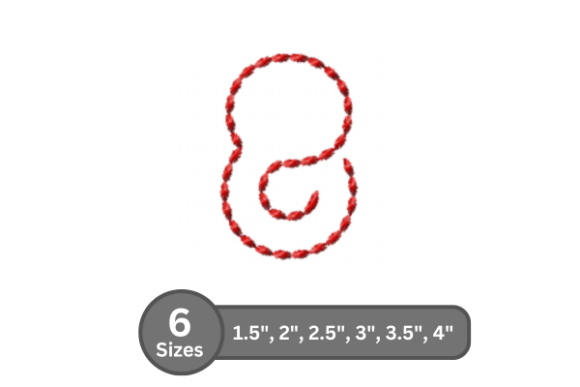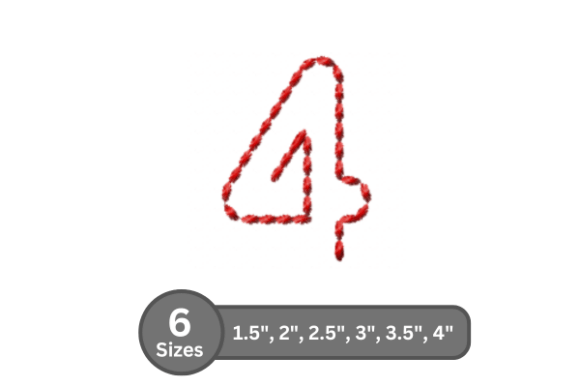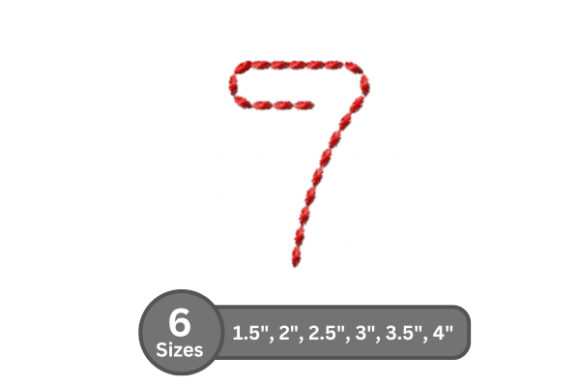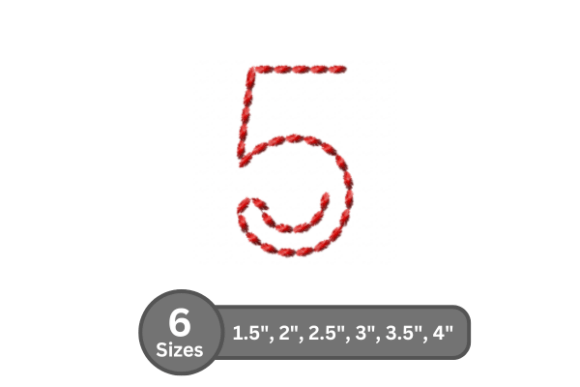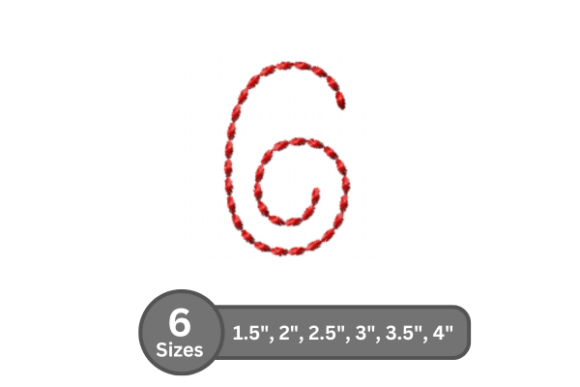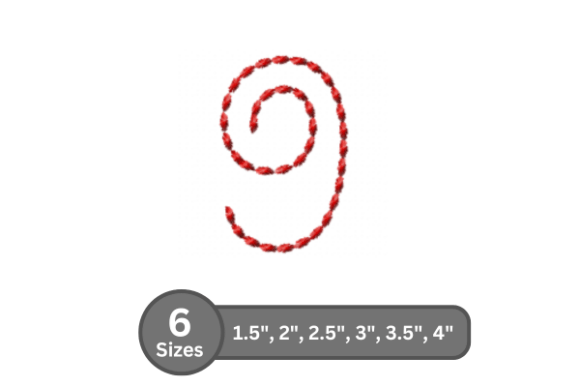
Soft Cord Number -9: A Craft Fair-Ready Monogram Font
First Impression: Soft, Modern, and Quietly Confident
When I unzipped the Soft Cord Number -9 embroidery file, my first thought wasn’t “cute” or “bold”—it was calm. This isn’t a shouty number font meant for festival merch. It’s a softly rounded, fill-stitch monogram with gentle curves, even weight distribution, and subtle cord-like dimensionality. It reads as modern-minimalist but with handmade warmth—think farmhouse kitchen charm meets boutique apothecary shelf. For craft fair sellers, that balance is gold: it appeals to buyers who value intentionality over trend-chasing, and it photographs beautifully without needing filters.
Where Soft Cord Number -9 Shines on Real Handmade Products
I tested Soft Cord Number -9 across seven booth staples: linen tea towels, canvas tote bags, cotton aprons, twill caps, denim pouches, linen pillow covers, and embroidered patches. Here’s what stood out:
- Tote bag design: At 3.5" wide, Soft Cord Number -9 anchors the lower corner of a natural canvas tote—clean, legible, and quietly premium. Customers paused longer at this piece than at script-font alternatives.
- Apron embroidery: Centered above the pocket (2.75" height), it reads instantly—even from six feet away—and reinforces the “handmade with care” vibe. No squinting required.
- Tea towel embroidery: On textured terry or waffle-weave, the fill stitch holds its shape well—but only when paired with medium-weight cutaway stabilizer. Avoid ultra-thick terry unless you reduce density in test runs.
- Embroidered patch: At 1.5", the number stays crisp and dimensional. Great for sew-on or iron-on applications on jackets, backpacks, or kids’ lunchboxes.
- Caps & curved surfaces: Not ideal for full-front cap placement. The soft curves compress slightly on high-crown curves. Better suited for side-strap or back-strap placement at ≤1.25".
What Makes Soft Cord Number -9 Sell at the Booth—and Online
This isn’t just another digital embroidery file—it’s a customer engagement tool. At my last craft fair, three buyers asked, “Is that hand-drawn?” before realizing it was machine-embroidered. That perception of artisanal quality lifts perceived value instantly. As an Etsy seller or small shop product, Soft Cord Number -9 works especially well in curated bundles: “Personalized Tea Towel + Apron Set” or “Monogrammed Market Bag Collection.” Its restraint makes it feel intentional—not generic.
For printable mockups and Etsy listings, it photographs consistently across fabric colors. Light thread on dark fabric? Yes—just avoid black-on-black. White on oatmeal linen? Crisp and inviting. And because it’s not overly dense, it renders cleanly in flat-lay photos without distracting shadow noise.
Production Realities: What You Need to Know Before Batch Runs
Soft Cord Number -9 is digitized for smooth stitching—but “smooth” doesn’t mean “no prep.” Here’s what I learned after 42 test stitches:
- Stitch density matters. On lightweight fabrics like voile or rayon, reduce density by 8–10% or risk puckering. The fill areas are generous—not sparse—but they’re not built for sheer materials.
- Small lettering = careful hooping. Below 1.1", detail softens. Don’t use Soft Cord Number -9 for tiny cuff labels or wristband numbers unless you’ve verified clarity on your specific machine and thread combo.
- Dark fabric demands contrast. On navy, charcoal, or deep olive, use bright ecru, pale grey, or mustard—not off-white. The softness of the design disappears if thread blends too much.
- Fabric texture changes everything. On looped terry or heavy burlap, the number gains rustic charm—but test first. Some loops catch in the fill stitch and create slight haloing.
Why Soft Cord Number -9 Strengthens Your Brand—Not Just Your Booth
In a sea of glitter fonts and cursive monograms, Soft Cord Number -9 signals consistency. It’s repeatable across product categories without feeling repetitive. Use it on your tea towels, then echo it on your packaging stamp or woven label—and suddenly your brand has quiet cohesion. Buyers remember that. At craft fairs, I’ve watched customers return to my table specifically to match a number on their tote with the same one on a pillow cover. That’s cross-product pull—and it starts with a font that feels like part of a system, not a one-off.
It also supports scalability. Whether you’re running five pieces or fifty, Soft Cord Number -9 maintains integrity. No micro-details vanish mid-run. No jump stitches misfire. That reliability means less rework, fewer customer complaints, and smoother commercial embroidery workflows.
Essential Embroidery Designer Notes Before You Cut Fabric
Before launching Soft Cord Number -9 into production, do these six things:
- Test the machine embroidery design on scrap fabric matching your final product’s weight and weave.
- Check thread contrast under both natural and booth lighting—some ecru threads look beige in shade but yellowish under LED.
- Review spacing between numbers if using sequences (e.g., “2024”)—tight kerning can blur on textured surfaces.
- Confirm hoop size compatibility; while flexible, oversized versions may require multi-hooping on smaller machines.
- Inspect stitch density visually—not just in software. Dense fills can flatten on low-loft stabilizers.
- Create at least one real, finished product mockup—not just a digital preview. See how it drapes, folds, and catches light.
And always verify commercial licensing terms before selling finished products. As a Monograms-focused embroidery designer, I treat every digital embroidery file as a long-term asset—not just a weekend craft fair product. Soft Cord Number -9 earns its place in that rotation: soft in tone, strong in function, and unmistakably made for makers who sell with heart and precision.