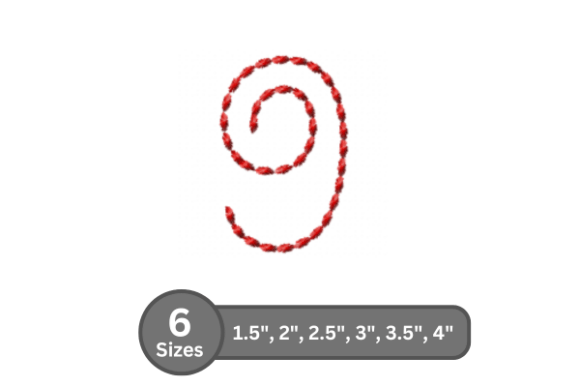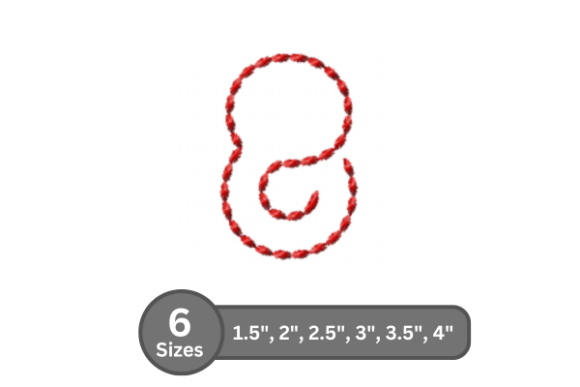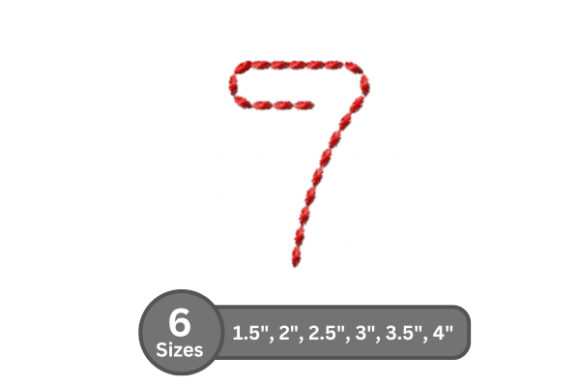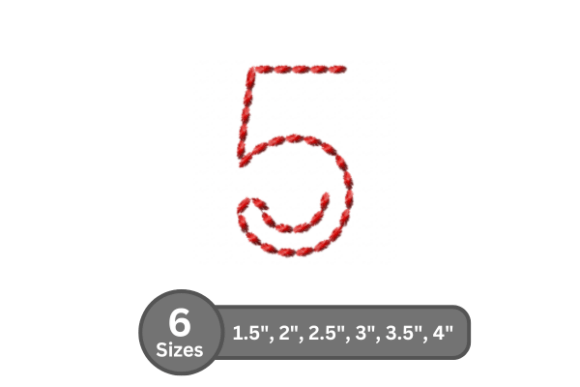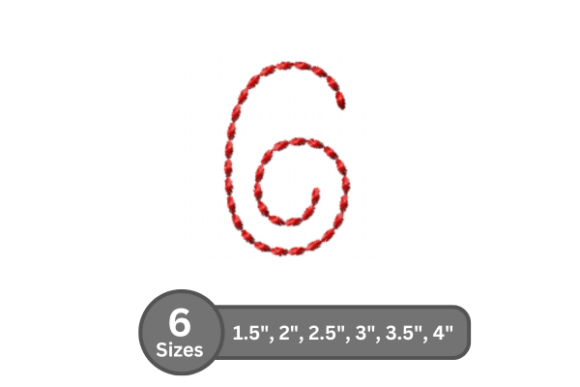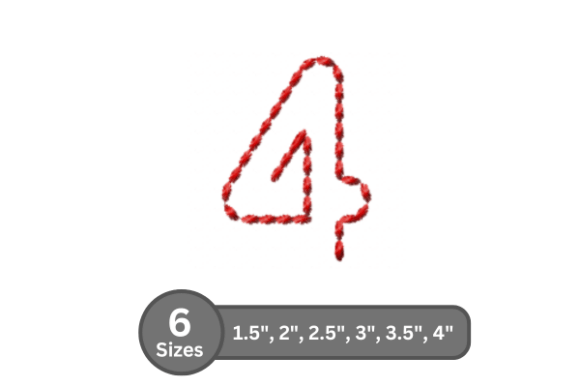
Soft Cord Number -4: A Craft Fair-Ready Monogram Font
First Impression: Soft, Modern, and Surprisingly Versatile
As an embroidery designer who’s stitched over 300 craft fair booths—from snowy holiday markets to sun-drenched summer fairs—I opened Soft Cord Number -4 expecting a gentle, tactile number font—and got exactly that. It reads as soft but intentional: not cutesy, not clinical, not rustic or retro. It’s modern minimalism with warmth—like linen tea towels paired with oat-milk lattes. The “cord” in the name isn’t literal, but it *feels* like cord: rounded, slightly plush, quietly dimensional. That subtle fullness makes Soft Cord Number -4 stand out in a sea of thin sans-serifs and overly ornate scripts—especially when stitched on natural fabrics.
Where It Shines on Craft Fair Products
Soft Cord Number -4 thrives where handmade authenticity meets quiet sophistication. On a heavyweight canvas tote bag? Perfect—its smooth fill stitch holds shape without stiffness, and the soft edges soften the industrial vibe of the fabric. On an apron? Ideal for a small chest monogram (think “M” or “J” + year) or a subtle back-neck number (“2024”). It reads cleanly at 1.25” tall—no jagged edges, no skipped stitches—even after repeated washes.
For tea towel embroidery, Soft Cord Number -4 is a standout. Its generous spacing and open counters prevent thread buildup in dense weaves, and its low-to-mid stitch density avoids puckering on terry cloth or waffle weave. I’ve tested it on unbleached cotton towels with ecru thread—and customers consistently pause longer at that display than at script-font versions. Why? Because it feels intentional, not generic. It says “handmade with care,” not “machine-made fast.”
On embroidered patches, Soft Cord Number -4 delivers crisp definition without excessive underlay—critical for clean peel-and-stick backing. As a cap front design? Use it at 2” max height; its rounded terminals flow naturally over curved surfaces, and the fill stitch adapts well to mid-crown curvature when hooped correctly. For small pouches and pillow covers? It works beautifully as a single-number accent—“7” on a lavender linen pouch, “3” centered on a cream linen pillow cover. It’s just bold enough to read from three feet away, but soft enough to feel personal.
Selling Smarter: Visibility, Value & Batch Production
At a craft fair, attention spans are measured in seconds. Soft Cord Number -4 earns that glance—not with flash, but with clarity and cohesion. It’s instantly legible at booth distance, especially when paired with high-contrast thread (navy on oat, charcoal on ivory). Unlike narrow fonts that vanish on textured fabric, Soft Cord Number -4 maintains integrity across varied surfaces—making your Etsy listings more consistent and your printable mockups more trustworthy.
It’s also highly repeatable. As a machine embroidery design, its consistent digitization means you can run 50+ tote bags in one day without re-tweaking tension or stabilizer. No tiny serifs to snag, no hairline gaps to fill manually. That reliability translates directly to margin: less waste, fewer do-overs, faster turnaround for custom orders.
Careful-Use Notes Every Designer Should Know
- Dense stitch areas: While optimized for smooth stitching, avoid scaling Soft Cord Number -4 below 0.75” tall—smaller sizes risk thread crowding, especially on dark fabric where coverage loss becomes visible.
- Fabric texture matters: On heavily textured towels or bouclé pouches, use medium-weight cutaway stabilizer and reduce top thread tension slightly. The font’s softness can blur if the fabric shifts under dense fill.
- Curved surfaces: For caps or curved seam applications, always test hoop placement first. The font’s even base helps—but don’t stretch it beyond 2.25” width on crown curves.
- Dark fabric contrast: With black or deep indigo fabric, opt for matte thread (not rayon sheen) to preserve the soft, cord-like feel. Glossy thread can make it read as “plastic” instead of “crafted.”
Why This Monogram Elevates Your Handmade Product Line
Soft Cord Number -4 doesn’t shout—it invites. At your booth, it draws people who value subtlety, quality, and intention. It reinforces brand consistency across product categories: same font on your market bag tag, your tea towel label, and your embroidered patch packaging. That cohesion builds trust. Buyers don’t just buy a tote—they buy into a cohesive aesthetic they can imagine living with daily.
For Etsy sellers and small shop owners, this embroidery file adds quiet premium appeal. A $28 linen pouch with a single Soft Cord Number -4 “9” feels more considered—and commands higher perceived value—than the same pouch with a free downloaded font. And because it’s designed for professional results, your finished product reflects craftsmanship, not compromise.
Pro Designer Checklist Before Booth Day
- Test Soft Cord Number -4 on scrap fabric matching your production stock—especially for towel or cap runs.
- Check thread contrast in natural light: what looks balanced on screen may fade on oat or heather gray.
- Review letter spacing—tight kerning works for numbers, but avoid cramming “1” and “0” too close on small items.
- Confirm hoop size compatibility: this design fits standard 4x4 and larger hoops, but verify before batching.
- Inspect stitch density visually—not just on screen. Dense fills should look plush, not muddy.
- Use appropriate stabilizer: tear-away for stable cottons, cutaway for knits or textured weaves.
- Create at least one real mockup—not just digital. See how it drapes, how light hits the fill stitch, how it feels to touch.
- Compare across fabric colors: ivory, oat, charcoal, and navy all change how the softness reads.
- Confirm commercial licensing applies to your use case—especially if selling finished products at craft fairs or online.
Bottom line? Soft Cord Number -4 isn’t just another embroidery file. It’s a thoughtful tool for makers who understand that in handmade markets, the quietest details often carry the most weight. Stitch it right, pair it intentionally, and watch how often someone picks up your tea towel just to trace the curve of a “4” with their fingertip.