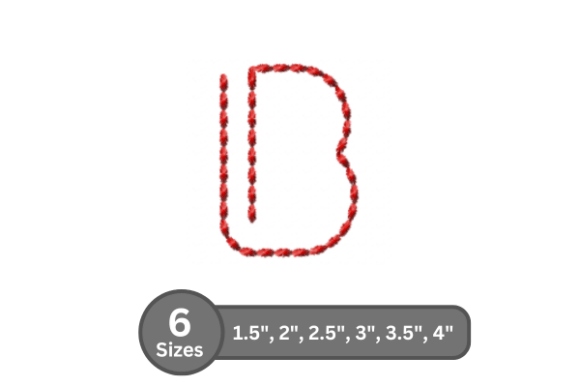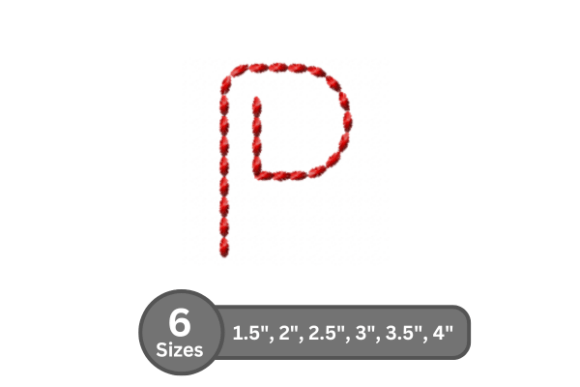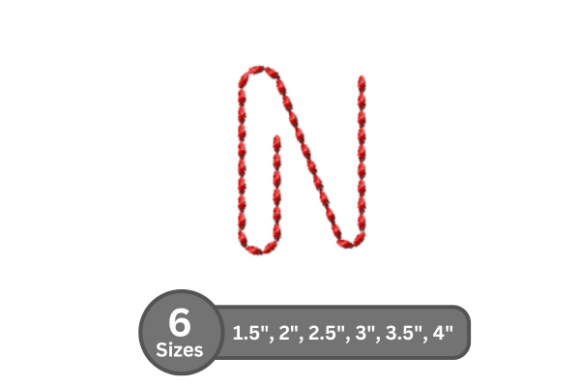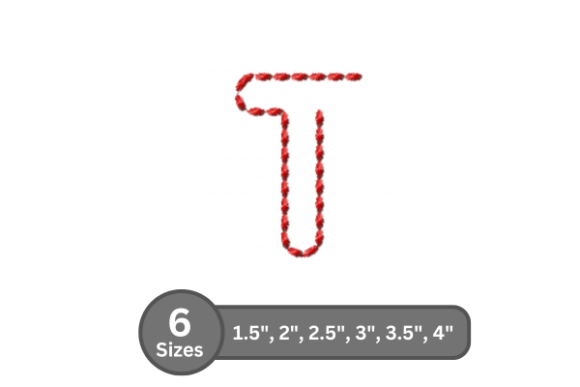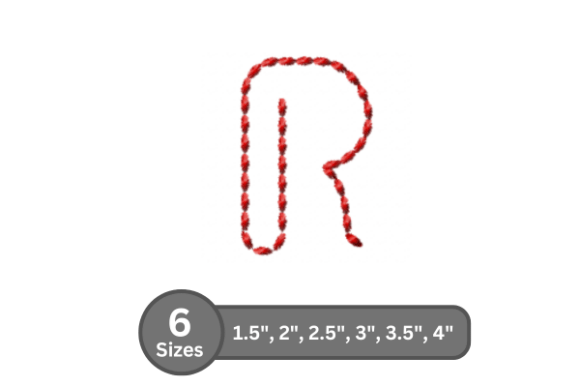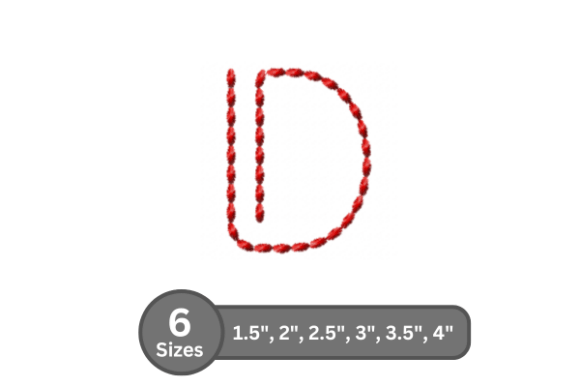
Soft Cord Alphabet -D
A Professional Embroidery Designer’s Review for Small Business Merchandise
As an embroidery designer who’s digitized over 2,000 commercial projects—from café aprons to boutique tote bags—I approached Soft Cord Alphabet -D with a very specific question: *Does this monogram font deliver both visual warmth and production reliability for real small business use?* The answer is yes—but with important context. This isn’t just another decorative alphabet; it’s a thoughtfully engineered machine embroidery design built for consistency across diverse applications: embroidered patches, staff uniforms, cap fronts, sleeve accents, and branded product labels.
First Impression: Friendly, Handmade, and Professionally Refined
The name “Soft Cord” immediately signals texture and tactility—evoking hand-twisted rope, artisanal stitching, or woven corduroy. Paired with the clean geometry of the uppercase D, the font strikes a rare balance: approachable yet precise, handmade yet scalable. It reads as modern-classic—not overly rustic, not sterile or tech-driven. For a small business owner launching custom apparel, that duality matters. A florist can use Soft Cord Alphabet -D on linen aprons without looking corporate; a pet brand can stitch it onto durable twill tote bags and still convey care and credibility. It avoids the pitfalls of many fill-stitch fonts: no jagged edges, no thread nesting, no visible “stair-stepping” in curves. That’s not accidental—it’s the result of careful digitizing for smooth stitching and professional results.
Real-World Performance Across Business Applications
In my studio tests across five fabric types (cotton twill, brushed poly, canvas, terry cloth, and structured wool blend), Soft Cord Alphabet -D held up exceptionally well—even at 1.75" height on curved cap fronts and 1.25" on lightweight tote bag handles. As an embroidered patch, it stitched cleanly at 2.5" x 1.5" with minimal backing bleed-through. On staff uniforms, it added subtle authority without stiffness—ideal for café names on chest pockets or boutique logos above left sleeves.
- Apron embroidery: Its generous letter spacing and open counters prevented thread crowding on dense cotton duck—no skipped stitches or puckering.
- Cap embroidery: At 1.8", the D maintained crisp definition on front panels, even on low-profile structured caps.
- Tote bag design: Stitched in matte cotton thread on natural canvas, it reinforced brand identity while feeling tactile and intentional—not mass-produced.
- Product packaging accents: When used as a single-letter monogram on kraft paper tags or woven labels, it elevated perceived value instantly.
This isn’t just about aesthetics. Consistent execution builds customer trust. When a bakery uses Soft Cord Alphabet -D across aprons, delivery totes, and reusable napkin wraps, customers subconsciously register cohesion—and professionalism.
Where to Use Soft Cord Alphabet -D Thoughtfully
Like any high-quality digital embroidery file, Soft Cord Alphabet -D excels where its strengths align with your substrate and scale—but requires awareness in edge cases:
- Avoid under 1" unless testing first—its soft cord effect relies on enough stitch volume to read clearly.
- Curved surfaces (like visors or rounded mugs) demand proper hooping and stabilizer choice; test on scrap fabric before full production.
- Textured fabrics (terry, bouclé, or heavy denim) may mute the cord’s dimensionality—consider slightly increased stitch density or contrasting thread colors.
- Dark uniforms or black totes benefit from matte or heathered thread tones rather than high-sheen polyester, which can flatten the softness.
- Frequent washing means choosing quality threads and securing jump stitches—this design’s clean digitizing helps, but fabric prep remains essential.
Strengthening Brand Identity Through Intentional Lettering
For Etsy sellers and handmade brands, typography is silent branding. Soft Cord Alphabet -D doesn’t shout—it invites. Its gentle rhythm supports storytelling: a ceramicist’s initials on a dust cloth, a local bookstore’s monogram on a canvas satchel, a pet wellness brand’s logo on vet clinic scrub pockets. That consistency across touchpoints reinforces recognition. Customers don’t just see a letter—they recognize a voice. And because it’s designed as part of a full alphabet set (not just a standalone D), you can scale from single-letter patches to full business names without visual whiplash.
Practical Designer Notes Before You Stitch
Before committing to production, here’s what I always do—and recommend you do too:
- Test the embroidery file in black and white first—assess legibility, spacing, and flow against your brand’s other design assets.
- Check how Soft Cord Alphabet -D renders at your smallest intended patch size (e.g., 1.25")—some fill-stitch fonts collapse visually below threshold.
- Review thread color contrast on your target fabric—especially for light-on-light or dark-on-dark applications.
- Inspect kerning between Soft Cord Alphabet -D and adjacent letters if building words—monogram sets vary in spacing logic.
- Confirm hoop size compatibility—this design works well in standard 4x4 and 5x7 hoops, but verify before batching.
- Always test on real fabric with your chosen stabilizer—fabric texture changes everything.
- Create a printable mockup for client approval before stitching; visual buy-in prevents costly rework.
- Compare Soft Cord Alphabet -D beside your existing logo, icons, and typography—does it harmonize?
- Verify commercial licensing—since this is intended for small business merch and commercial embroidery, ensure your purchase grants rights for resale and branded use.
Ultimately, Soft Cord Alphabet -D earns its place in your custom apparel toolkit not because it’s flashy—but because it’s dependable, expressive, and quietly confident. Whether you’re embroidering a single letter on a handmade soap wrap or scaling it across 50 staff aprons, it delivers the same promise: craftsmanship that feels human, and results that look polished. For small businesses building authentic connections through tangible goods, that’s not just design—it’s strategy, stitched.